
What Are Liquid Diamonds?
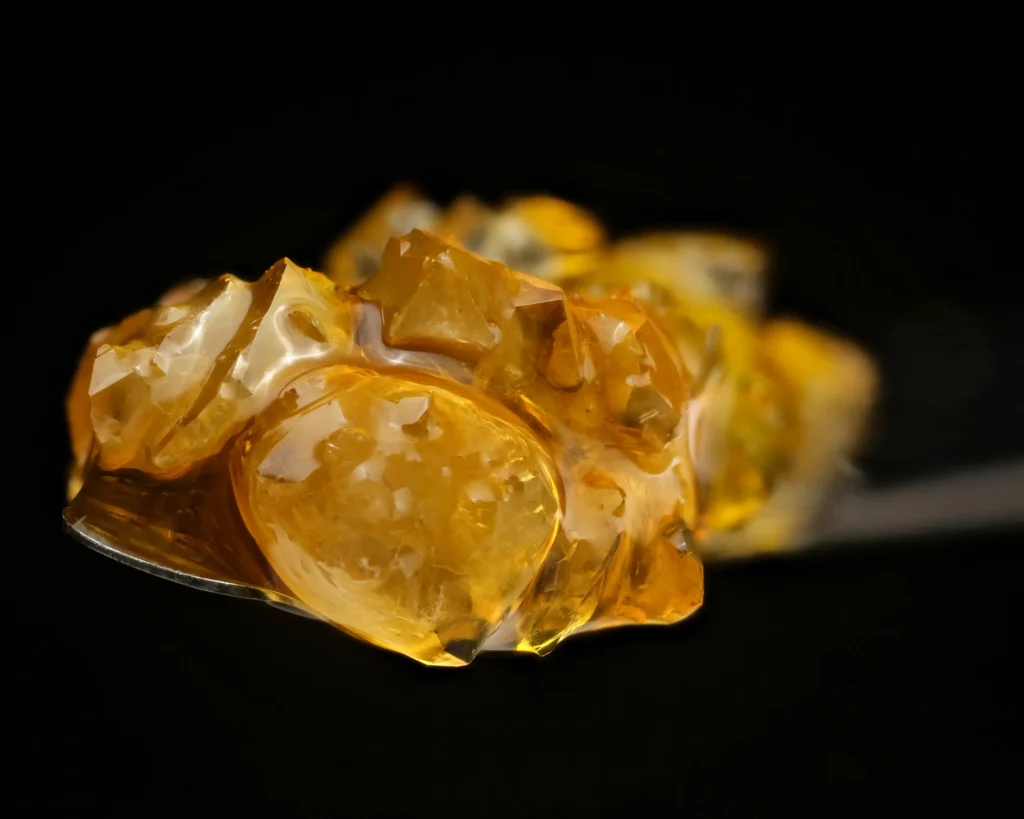
Liquid diamonds are THCa crystals dissolved back into a terpene-rich cannabis sauce, producing a pourable concentrate that tests between 90% and 99% THC. The crystals supply the potency, the sauce supplies the flavour and aroma, and recombining them creates something neither part achieves alone.
The name is literal. Under the right conditions THCa forms visible crystalline structures in a cannabis extract — producers call them diamonds — and “liquid” describes what happens when those crystals go back into solution.

How Strong Are Liquid Diamonds?
Liquid diamonds typically test between 90% and 99% total THC, which makes them among the most potent cannabis products commercially available. For comparison, cannabis flower generally tests between 15% and 30%.
The reason the ceiling is so high is the crystals. THCa crystalline is close to a pure isolated compound — separating it concentrates the cannabinoid far beyond what any whole-plant extract reaches. Dissolving it back into sauce dilutes it slightly and adds the terpenes back, which is the trade the format is built around.
One number on a certificate confuses almost everyone, so it is worth explaining. A lab report will show THCa, delta-9 THC and total THC as three different figures. Raw THCa is not psychoactive. Heat converts it to delta-9 THC, and because THCa is the heavier molecule the conversion is not one-to-one:
Total THC = (THCa × 0.877) + delta-9 THC
That is why a liquid diamond certificate can show a very low delta-9 number alongside a 90%+ total. The 0.877 factor accounts for the weight lost in the conversion, and the total is the figure that describes what you actually experience.
How Liquid Diamonds Are Made
Four stages. The interesting part is that stages two and three are the same process run in reverse of how most people assume.
1. Extraction
Production usually starts with fresh-frozen cannabis rather than dried and cured flower. Freezing the plant immediately after harvest preserves the volatile terpenes that would otherwise evaporate during a cure — the same starting material used for live resin.
2. Crystallisation
The extract is held under controlled temperature and pressure. Over days to weeks, THCa separates out of the solution and forms crystalline structures, while the terpenes and other cannabinoids remain in a viscous liquid around them.
Producers call this “diamond mining.” It is closer to growing sugar crystals in a saturated syrup than to any kind of filtration.
3. Separation
Two products now exist in the same jar: the THCa crystals, and the terpene-rich liquid they formed in — usually called sauce, or high-terpene full-spectrum extract. Both are sold separately in their own right.
4. Recombination
For liquid diamonds, the crystals are crushed and dissolved back into the sauce, usually with gentle heat, until the mixture is homogeneous and pourable.
That final step is what makes the format work in a vape. Raw THCa diamonds are solid and cannot be drawn through a coil; sauce alone is flavourful but lower in potency. Combined, the result is liquid enough to fill a cartridge and potent enough to justify doing so.
Liquid Diamonds vs Live Resin vs Distillate
The three formats most often confused, and what actually separates them.
| Liquid Diamonds | Live Resin | Distillate | |
|---|---|---|---|
| Starting material | Fresh-frozen cannabis | Fresh-frozen cannabis | Dried, cured, or trim |
| Process | Crystallised, separated, recombined | Extracted at low temperature | Refined and stripped repeatedly |
| Typical THC | 90–99% | 65–85% | 85–95% |
| Terpenes | From the plant, in the sauce | From the plant, full spectrum | Removed — usually added back |
| Flavour source | The plant | The plant | Usually added flavouring |
| Leads with | Potency | Aroma and flavour | Price and consistency |
The distinction that matters most is the last row but one. Distillate is refined until almost nothing remains except cannabinoids — including the compounds that give cannabis its smell and taste. Flavour is then added back afterwards, which is why so many inexpensive vapes taste generically sweet regardless of the strain named on the box.
Liquid diamonds and live resin both keep the plant’s own terpenes. That is the real dividing line in this category, and it is not the one the packaging usually emphasises.
Is liquid diamond stronger than live resin? Usually yes, by a meaningful margin — 90–99% against roughly 65–85%. Live resin often carries more terpene character, so “stronger” and “better” are not the same question. Which one suits you depends on whether you are optimising for potency or for flavour.
Do Liquid Diamonds Get You High?
Yes, and more intensely than most cannabis products, because of the concentration.
THCa on its own is not psychoactive. When it is heated — in a vape coil, a dab rig, or a flame — it converts to delta-9 THC, which is. That conversion happens almost instantly at vaporising temperatures, so a liquid diamond product is effectively delivering delta-9 THC at 90%+ concentration from the first draw.
Inhaled THC typically takes effect within minutes and peaks within roughly half an hour. Duration varies widely between people and with dose.
What Liquid Diamonds Do in the Body
THC acts on the body’s endocannabinoid system, binding primarily to CB1 receptors concentrated in the brain and central nervous system. That interaction is what produces the psychoactive effects associated with cannabis.
Commonly reported effects include altered mood and perception, relaxation, changes in appetite, and impaired short-term memory and coordination. Less desirable but well-documented reactions — particularly at high doses — include increased heart rate, dry mouth, dizziness, and in some people anxiety or paranoia.
Two honest points about concentration specifically, which most pages selling these products leave out:
Potency raises the consequences of a small mistake. At 90%+ THC, the difference between a comfortable draw and an uncomfortable one is a second or two of inhalation. That is a much narrower margin than with flower, and it is the single most common reason people have a bad experience with concentrates.
Tolerance is not protection. A high tolerance built on flower does not translate cleanly to a concentrate at three to five times the potency.
If you are new to concentrates, a two-second draw and a fifteen-minute wait is the approach that avoids most problems. Effects vary considerably between individuals, and nothing on this page is medical advice.
Do Liquid Diamonds Contain CBD?
Generally very little. Liquid diamonds are built around THCa crystals, and the crystallisation process selects for THCa specifically — other cannabinoids largely stay behind in the sauce.
Some minor cannabinoids survive in the terpene fraction, so a certificate may show trace CBD, CBG or CBN. The amounts are usually small enough to be irrelevant to the experience. If a product’s cannabinoid balance matters to you, the certificate is the only reliable answer — every batch differs, and the profile is printed on it.
How Liquid Diamonds Are Used
Three formats, in rough order of how most people encounter them.
Vapes and cartridges. The most common by a distance. The recombined liquid is viscous enough to hold in a tank and thin enough to draw through a coil, which is exactly what the format was engineered for.
Dabbing. Vaporised on a heated surface in a rig. This is how concentrates were consumed before the vape format matured, and it remains the enthusiast route.
Preroll infusion. Added to flower in a joint to raise its potency, usually alongside a kief coating.
Liquid Diamonds in Cali Clear
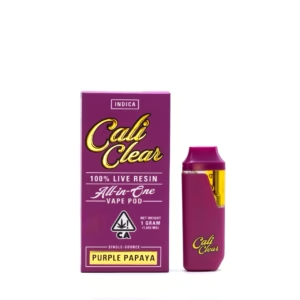
Cali Clear builds its 2g disposables around liquid diamonds, testing at 90–95% THC, with the certificate for each batch published on our lab reports page. That page also explains how to read the cannabinoid panel if the THCa and total THC figures above were new to you.
The 2g format is the one that carries liquid diamonds — see the 2g disposable range. The smaller 1g live resin uses live resin instead, which is the trade described in the comparison table above: more terpene character, lower ceiling.
Frequently Asked Questions
What are liquid diamonds? Liquid diamonds are THCa crystals dissolved back into a terpene-rich cannabis sauce, producing a pourable concentrate testing between 90% and 99% THC. The crystals supply potency; the sauce supplies flavour and aroma.
How strong are liquid diamonds? Typically 90% to 99% total THC, compared with 15% to 30% for cannabis flower. They are among the most potent cannabis products commercially available.
Do liquid diamonds get you high? Yes, and more intensely than most cannabis products. THCa is not psychoactive on its own, but heating converts it to delta-9 THC almost instantly at vaporising temperatures.
Is liquid diamond stronger than live resin? Usually, by a meaningful margin — 90–99% against roughly 65–85% for live resin. Live resin often carries more terpene character, so stronger and better are different questions.
What do liquid diamonds do to your body? THC binds to CB1 receptors in the brain and central nervous system, producing effects commonly described as altered mood and perception, relaxation and changed appetite. At high doses, increased heart rate, dizziness and anxiety are well documented. Effects vary between individuals.
Are liquid diamonds the same as distillate? No. Distillate is refined until terpenes are stripped out and flavouring is usually added back. Liquid diamonds keep the plant’s own terpenes in the sauce the crystals are dissolved into.
Do liquid diamonds contain CBD? Usually only trace amounts. The crystallisation process selects for THCa, so other cannabinoids largely remain in the terpene fraction. The batch certificate gives the exact profile.
Why is the delta-9 THC number so low on the lab report? Because most of the THC is still in its THCa form until heated. Total THC is calculated as THCa multiplied by 0.877, plus delta-9 THC — that is the figure that describes the product’s strength.