
The short version: liquid diamonds are the most potent, live resin carries the most terpene character, and distillate is the cheapest to make and the only one of the three whose flavour does not come from cannabis.
That last point is the one that matters and the one most comparisons bury. Potency is where these three are usually ranked against each other, but potency is the least useful axis — all three are far stronger than flower, and the gaps between them are smaller than the gap between any of them and a joint. Where the flavour comes from is the real dividing line, and it is the difference you can actually taste.
Staff picks
-
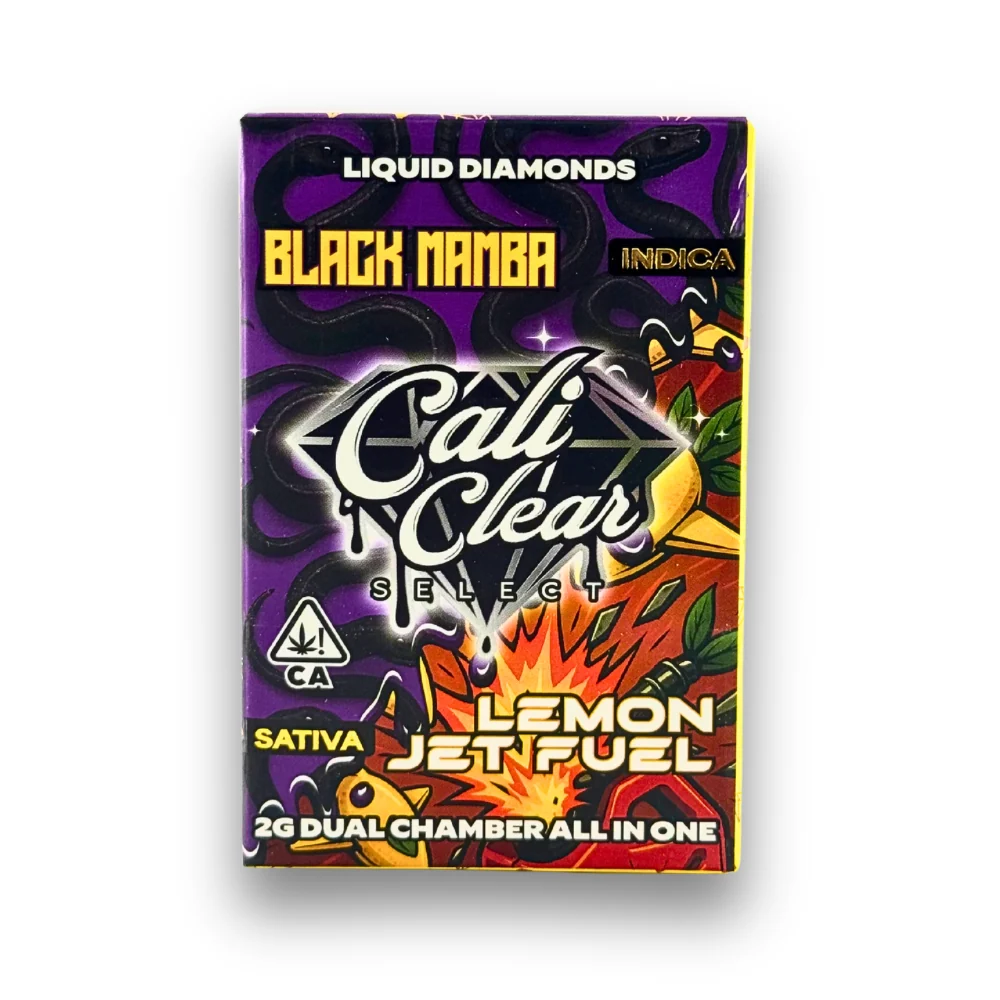
Black Mamba (Indica) x Lemon Jet Fuel (Sativa)
Original price was: $35.00.$30.00Current price is: $30.00. -
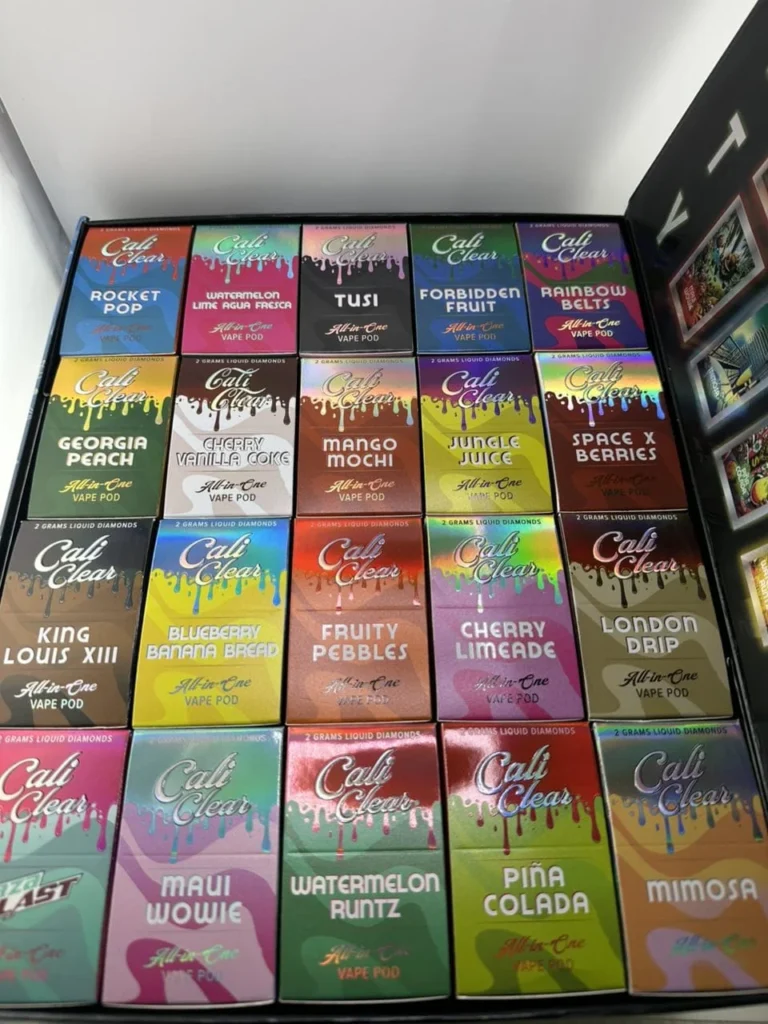
Cali Clear 2g Disposable bulk
Price range: $220.00 through $2,100.00 -
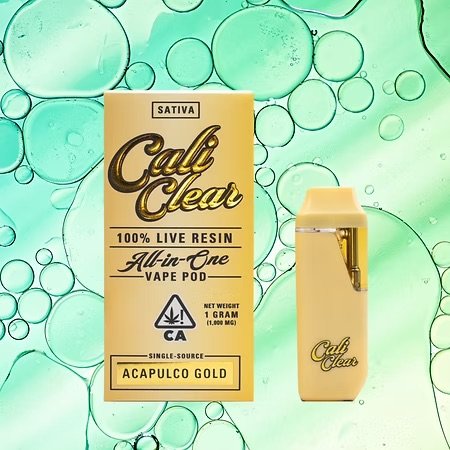
Cali Clear Acapulco Gold Live Resin Disposable Vape – 1G THC Cart
$25.00 -
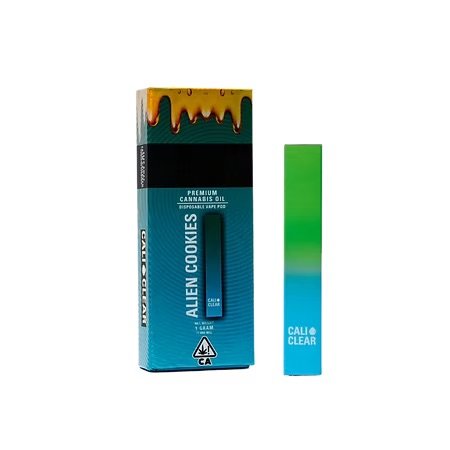
Cali Clear Alien Cookies – 1G THC All-In-One Disposable – Hybrid –
$20.76
The Comparison, in One Table
| Liquid Diamonds | Live Resin | Distillate | |
|---|---|---|---|
| Starting material | Fresh-frozen cannabis | Fresh-frozen cannabis | Dried, cured flower or trim |
| Core process | Crystallised, separated, recombined | Cold hydrocarbon extraction | Short-path distillation |
| Typical THC | 90–99% | 65–85% | 85–95% |
| Total terpenes | Roughly 2–8% | 4–12% | Near zero from the plant |
| Flavour source | The plant, via the sauce | The plant, full spectrum | Flavouring added after processing |
| Strain accuracy | High | Highest | None inherent |
| Relative cost to produce | Highest | High | Lowest |
| Leads with | Potency | Aroma and flavour | Price and consistency |
How Each One Is Actually Made
The processes explain every row in that table, so they are worth understanding rather than memorising.
Live resin
Cannabis is frozen immediately after harvest rather than dried and cured, then extracted with hydrocarbon solvents at very low temperature — Terpene Belt Farms puts the extraction environment at −40°F or below.
The cold is the whole point. Terpenes are volatile compounds; a conventional dry and cure drives a large share of them off before extraction ever begins. Freezing at harvest and keeping the material cold through extraction is what preserves not just the major terpenes but the fragile trace compounds — thiols, esters, aldehydes — that make one cultivar smell different from another.
This is also why live resin is expensive. It requires cold-chain handling from the field onward, which is a logistics problem rather than a chemistry one. liquid diamonds vs live resin
Distillate
Distillate starts from dried, cured material — often trim — and goes through short-path distillation, which separates the extract into fractions by volatility under vacuum.
Here is the part that most explanations skip. Distillate does not lose its terpenes by accident or through carelessness. Terpenes are much more volatile than cannabinoids, so they come off in an earlier fraction and are separated out by design. The process is working exactly as intended; removing everything that is not a cannabinoid is the objective. Story Cannabis describes it as stripping the extract down to near-pure cannabinoids, removing terpenes, waxes and other plant compounds and leaving something with very little flavour of its own.
What comes out is a clear, odourless, near-tasteless oil of 85–95% THC. Flavour is then added back — sometimes cannabis-derived terpenes, frequently botanical or food-grade flavouring. That is why a distillate cart named after a strain often tastes like a generic sweetness: the name describes the input, and the taste describes the flavouring.
Liquid diamonds
Liquid diamonds also start from fresh-frozen material. The extract is held under controlled temperature and pressure until THCa separates out of solution as crystals, the crystals are separated from the terpene-rich sauce around them, and then the two are recombined into a pourable concentrate.
The crystals supply the potency, the sauce supplies the flavour, and the format exists because neither half works alone in a vape — raw THCa crystals are solid and cannot be drawn through a coil, and sauce by itself is flavourful but much lower in THC. The full production sequence and the lab-report maths are on our liquid diamonds page.

The Number That Tells You Which One You Actually Bought
Here is the practical test, and it is the reason this page is worth reading rather than the potency table.
Look at total terpenes on the certificate of analysis, not THC.
THC will not distinguish these formats reliably — a strong live resin and a weak liquid diamond can land within a few points of each other, and distillate can outscore live resin outright. Terpene content separates them cleanly:
| Total terpenes on the COA | What you are probably holding |
|---|---|
| Near zero, or no terpene panel at all | Distillate. Any flavour was added after processing |
| Roughly 2–8% | Liquid diamonds — crystals dilute the terpene fraction |
| 4–12% | Live resin |
| 13–40% | High-terpene extract (HTE), a different product again |
Those live resin and HTE figures come from Terpene Belt Farms’ processor guide, which is written for extractors rather than shoppers and is the more reliable for it.
Two things follow from this that are worth saying plainly:
A product that publishes a THC number but no terpene panel has told you something. Terpene testing is an additional lab cost. A producer whose flavour comes from the plant has a commercial reason to pay for it and publish the result. A producer whose flavour comes from a bottle does not.
Added flavouring does not appear as terpenes on a cannabis panel. Botanical flavourings are not what a terpene panel is looking for, so a heavily flavoured distillate can taste intensely of something and still show a terpene profile near zero. The taste in your mouth is not evidence about the extract. The certificate is.
Is Liquid Diamond Stronger Than Live Resin?
Usually yes, and by a meaningful margin — roughly 90–99% THC against 65–85%.
The reason is structural rather than a matter of quality. THCa crystalline is close to an isolated compound, so separating it concentrates the cannabinoid far past what any whole-plant extract reaches. Live resin keeps everything the plant produced, and terpenes occupy volume that cannabinoids would otherwise fill. A live resin is lower in THC because it is higher in everything else.
Which means “stronger” and “better” are genuinely different questions here, and the honest answer depends on which one you are asking. If you want the highest possible THC per draw, liquid diamonds. If you want the clearest expression of a specific cultivar, live resin.
Live Resin vs Distillate
This is the comparison with the largest real-world gap, and it is not close on flavour.
Live resin keeps the plant’s own terpene profile, including the trace compounds that make a cultivar identifiable. It costs more to produce, and it tests lower in THC because the terpenes take up room.
Distillate is refined until only cannabinoids remain, then flavoured. It is cheaper, more consistent batch to batch, and tests higher in THC than live resin — which is why it dominates the value end of the market.
Distillate is not a defective product. It is a deliberately engineered one: a neutral, high-potency, shelf-stable base that behaves predictably. For edibles and tinctures, where cannabis flavour is often unwanted, it is the correct choice rather than a compromise. The problem is not distillate itself — it is distillate sold with a strain name on the box implying a flavour profile the extract does not contain.
Which Should You Choose?
Pick by what you are actually optimising for.
Choose liquid diamonds if potency per draw is the priority and you still want the flavour to come from cannabis. This is the highest-THC option that has not had its terpenes replaced.
Choose live resin if flavour and strain character matter more than the number on the label, and you would rather taste the difference between two cultivars than gain ten points of THC.
Choose distillate if price is the deciding factor and you are not buying it for the flavour — and go in knowing the flavour was added.
One caution that applies to all three. These are concentrates at three to five times the potency of flower. Tolerance built on flower does not transfer cleanly, and at 90%+ THC the difference between a comfortable draw and an uncomfortable one is a second or two of inhalation. A short draw and a fifteen-minute wait is the approach that avoids most bad experiences.
This page is educational and is not medical advice. Cannabis products have not been evaluated for the treatment of any medical condition.
Why All Three Exist
It is tempting to read this as a quality ranking with distillate at the bottom. It is closer to a cost ranking that produces three different products.
Live resin’s expense is cold-chain logistics. Liquid diamonds’ expense is time — crystallisation runs over days to weeks of controlled conditions before the product is even separated and recombined. Distillate’s economics work because it can be made from trim, the cheapest available input, and refined into something consistent enough to buy by the litre.
Each format is the right answer to a different question, and the market keeps all three because buyers are genuinely asking all three questions. What is not defensible is a strain name and a terpene claim on a product that contains neither — and that is a labelling problem, not a format problem.
What Cali Clear Uses
Cali Clear’s 2g disposables are built on liquid diamonds at 90–95% THC; the 1g format uses live resin. Batch certificates are published on our lab reports page — including, in line with everything above, the terpene panel.
Frequently Asked Questions
What is the difference between liquid diamonds and live resin? Liquid diamonds are THCa crystals recombined with terpene sauce, testing 90–99% THC. Live resin is a full-spectrum extract of fresh-frozen cannabis testing 65–85% THC with a higher terpene content. Both keep the plant’s own terpenes; liquid diamonds trade some terpene volume for potency.
Is liquid diamond stronger than live resin? Usually yes, by a meaningful margin — roughly 90–99% against 65–85%. Live resin tests lower because terpenes occupy volume cannabinoids would otherwise fill, not because it is a weaker extract.
What is the difference between live resin and distillate? Live resin keeps the plant’s own terpenes, tests 65–85% THC and costs more to produce. Distillate is refined by short-path distillation until only cannabinoids remain, tests 85–95% THC, and has flavour added back after processing.
How can I tell if a cart is live resin or distillate? Check total terpenes on the certificate of analysis. Distillate shows near zero or has no terpene panel at all; live resin typically shows 4–12%. Taste is not evidence — added flavouring does not register on a cannabis terpene panel.
Does distillate have terpenes? Not from the plant. Short-path distillation removes terpenes by design because they are more volatile than cannabinoids and separate into an earlier fraction. Any terpenes present were added afterwards.
Which concentrate has the most terpenes? High-terpene extract (HTE) at 13–40% total terpenes, which is a separate product from the three compared here. Among these three, live resin leads at 4–12%.
Is distillate bad? No. It is a deliberately neutral, consistent, high-potency base, and it is the right choice for edibles and tinctures where cannabis flavour is unwanted. The problem is distillate sold under a strain name implying a flavour profile the extract does not contain.
Which is best for flavour? Live resin, because it preserves the fullest terpene profile including the trace compounds that distinguish cultivars. Liquid diamonds are second, with a real but diluted plant-derived profile.
Written by Peter Grinspoon, product review expert and head of review at our authorized retail business. With years of dedicated experience in licensed cannabis retail and hardware evaluation, Peter ensures every product we recommend meets the highest standards of authenticity, safety, and performance.